
Dental Implants vs Dentures: Which Tooth Replacement Option Is Right for You?
Tooth loss can affect more than just your smile—it can impact your ability to chew comfortably, speak clearly, and maintain long-term oral health. When exploring tooth replacement solutions, many patients compare dental implants vs dentures to determine which option best fits their needs. Both treatments are clinically proven and widely used, yet they differ significantly in structure, durability, comfort, and maintenance. Understanding these differences is essential for making an informed decision that supports your lifestyle, oral health goals, and overall well-being. This article provides a detailed comparison of dental implants and dentures, explaining how each works, when they are recommended, and what factors to consider so you can confidently choose the right tooth replacement option.
What Is Dental Implants vs Dentures?
Dental implants vs dentures refers to the comparison between two primary methods of replacing missing teeth.
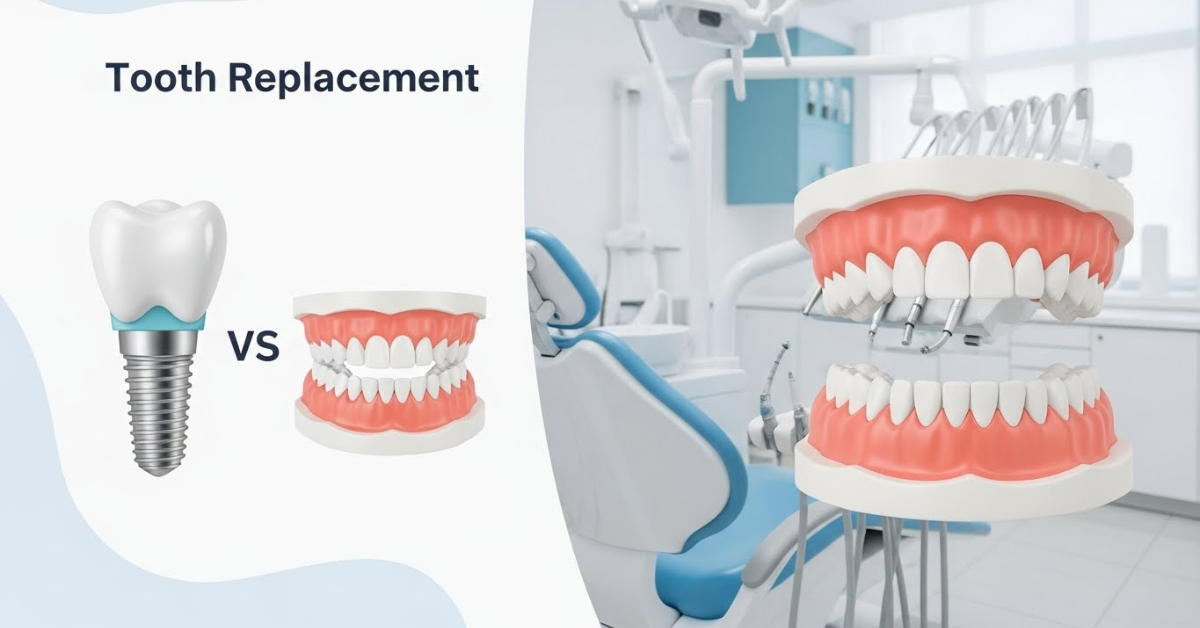
Dental implants are permanent tooth replacements that consist of a titanium post surgically placed into the jawbone. This post acts as an artificial tooth root and supports a crown, bridge, or implant-supported denture. Implants are designed to function and feel similar to natural teeth.
Dentures are removable prosthetic devices that replace multiple missing teeth or a full arch. They rest on the gums and may be secured using suction, clasps, or dental adhesive. Dentures can be full (complete) or partial, depending on the number of missing teeth.
Both options restore appearance and function, but they differ in stability, longevity, and impact on oral structures.
How Does Dental Implants vs Dentures Work?
Dental implants work through a biological process known as osseointegration, where the implant post fuses with the jawbone to create a stable foundation.
Dental implant process:
- Evaluation and treatment planning
- Surgical placement of the implant into the jawbone
- Healing period for bone integration
- Placement of a dental crown or prosthetic
Dentures work by replacing missing teeth with a custom-fitted appliance that sits on the gums.
Denture process:
- Oral examination and impressions
- Fabrication of custom dentures
- Fitting and adjustments
- Ongoing maintenance and relining as gums change
While implants are fixed and non-removable, dentures require daily removal for cleaning and care.
Why Is Dental Implants vs Dentures Important?
Choosing between dental implants and dentures is important because missing teeth can lead to jawbone loss, shifting of remaining teeth, and bite misalignment if not properly addressed.
Dental implants help preserve jawbone density by stimulating the bone similarly to natural tooth roots. This can support facial structure and long-term oral stability. Dentures restore basic function and aesthetics, offering a non-surgical solution that can significantly improve quality of life.
Understanding the benefits and limitations of each option helps patients make decisions that align with their oral health needs, comfort expectations, and long-term goals.
Common Situations, Use Cases, and Types
Dental implants are commonly recommended for:
- Patients missing one or several teeth
- Individuals with adequate jawbone density
- Those seeking a permanent tooth replacement solution
- Patients wanting natural chewing and speaking function
Dentures are often used for:
- Patients missing many or all teeth
- Individuals seeking a non-surgical treatment option
- Those with limited bone density
- Patients looking for a more budget-friendly solution
There are also hybrid options, such as implant-supported dentures, which combine the stability of implants with the coverage of dentures.
When Should You Consider Dental Implants vs Dentures?
Dental implants may be the right choice if you want a long-term, stable solution that closely mimics natural teeth and helps maintain jawbone health. Dentures may be more appropriate if surgery is not recommended due to medical conditions, bone loss, or personal preference.
Factors to consider include:
- Overall oral and medical health
- Bone density and gum condition
- Budget and insurance coverage
- Willingness to undergo surgery
- Desired level of comfort and permanence
A professional dental consultation is essential to determine which option is most suitable for your individual situation.
Related Dental Treatments
Tooth replacement solutions often involve or connect with other dental services. General dentistry supports oral health before and after implants or dentures through routine exams and cleanings. Emergency dentistry may be needed if tooth loss occurs suddenly due to trauma or infection. Some patients also explore cosmetic dentistry treatments to enhance smile appearance after restoration. In certain cases, root canal treatment or gum therapy may be required prior to tooth replacement.
Frequently Asked Questions
Are dental implants better than dentures?
Dental implants are often considered more stable and long-lasting than dentures, but they are not ideal for everyone. The best option depends on oral health, bone density, medical conditions, and personal preferences.
How long do dental implants last compared to dentures?
Dental implants can last decades with proper care and maintenance. Dentures typically last 5 to 10 years before needing replacement or adjustment due to changes in the gums and jawbone.
Do dentures feel natural when eating and speaking?
Dentures can restore function, but some patients experience movement or discomfort, especially initially. Dental implants generally feel more natural and provide greater chewing stability.
Is dental implant surgery painful?
Dental implant placement is performed under local anesthesia, and most patients report mild, manageable discomfort during recovery. Pain is usually temporary and controlled with standard care.
Can dentures be replaced with dental implants later?
Yes, many patients transition from dentures to dental implants if they become suitable candidates. A dental evaluation is necessary to assess bone health and treatment options.
Conclusion
When comparing dental implants vs dentures, the right choice depends on individual oral health needs, lifestyle, and long-term expectations. Dental implants offer durability, stability, and bone preservation, while dentures provide a non-surgical, accessible solution for restoring missing teeth. Both options are effective when properly planned and maintained. Consulting with a dental professional ensures a personalized approach that supports function, comfort, and long-term oral health while helping you regain confidence in your smile.