
Invisalign vs Braces: Which Teeth Straightening Option Is Better?
Crooked or misaligned teeth can affect more than just appearance—they can influence oral health, comfort, and confidence. When exploring orthodontic treatment, many patients compare Invisalign vs braces to determine which teeth straightening option is better for their needs. Both treatments are effective and widely used, yet they differ in appearance, comfort, maintenance, and lifestyle impact. Understanding how Invisalign and traditional braces work, along with their benefits and limitations, can help you make an informed decision. This article provides a detailed, medically accurate comparison of Invisalign vs braces, explains when each option may be recommended, and highlights factors to consider so you can choose a solution that supports both your smile and long-term oral health.
What Is Invisalign vs Braces?
Invisalign vs braces refers to the comparison between two orthodontic methods used to straighten teeth and correct bite issues.
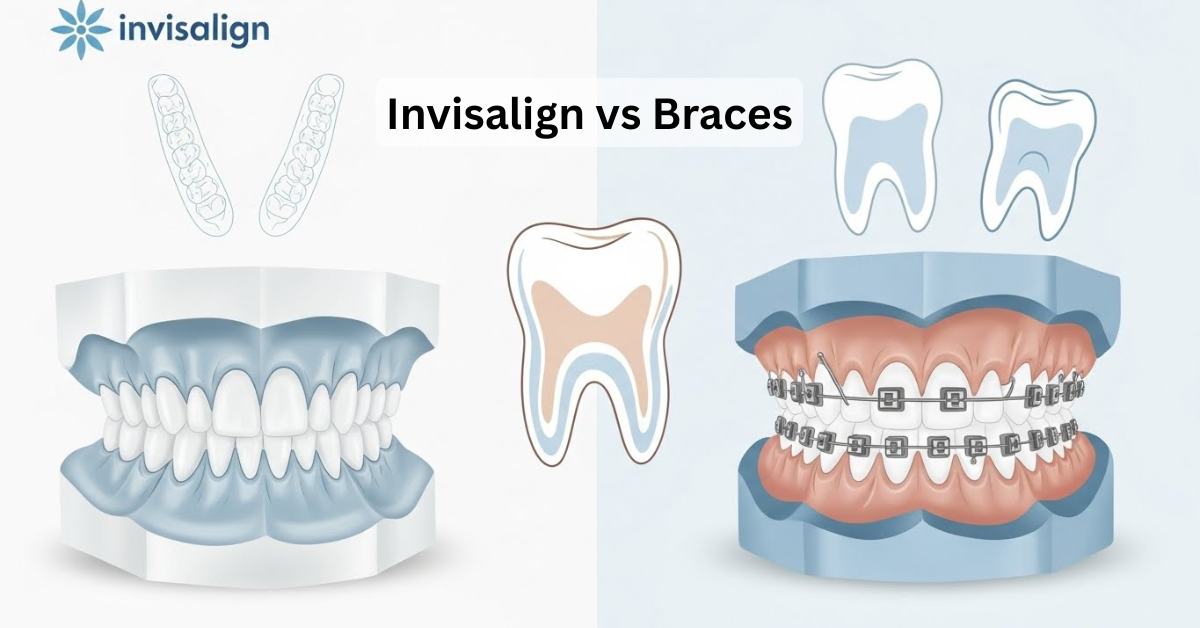
Invisalign uses a series of clear, removable aligners that gradually move teeth into proper alignment. These aligners are custom-made using digital scans and are designed to fit snugly over the teeth.
Braces consist of metal or ceramic brackets bonded to the teeth and connected by wires. Over time, controlled pressure from the wires moves teeth into the desired position.
Both Invisalign and braces are effective orthodontic treatments, but they differ in visibility, flexibility, and treatment approach.
How Does Invisalign vs Braces Work?
Both Invisalign and braces work by applying gentle, continuous pressure to move teeth gradually.
How Invisalign Works
- A digital scan or impression is taken to create a treatment plan
- Custom clear aligners are fabricated
- Aligners are worn for 20–22 hours per day
- New aligners are switched every 1–2 weeks
- Teeth move incrementally over time
How Braces Work
- Brackets are attached to the teeth
- Archwires are placed to guide movement
- Periodic adjustments tighten or change wires
- Teeth shift gradually into alignment
- Braces are removed once treatment goals are achieved
Both methods require regular dental monitoring to ensure safe and effective progress.
Why Is Invisalign vs Braces Important?
Choosing between Invisalign and braces is important because orthodontic treatment affects oral health, daily comfort, and long-term outcomes. Misaligned teeth can increase the risk of cavities, gum disease, uneven wear, and jaw discomfort.
Invisalign offers discreet treatment with removable aligners, making oral hygiene easier. Braces provide consistent, fixed correction and may be more effective for complex alignment issues. Understanding these differences helps patients select a treatment that aligns with their clinical needs, lifestyle, and expectations.
Common Situations, Use Cases, and Types
Invisalign is commonly recommended for:
- Mild to moderate crowding or spacing
- Adults and teens seeking discreet treatment
- Patients committed to wearing aligners consistently
- Individuals prioritizing flexibility and comfort
Braces are often recommended for:
- Moderate to severe misalignment
- Complex bite issues
- Patients who prefer a fixed treatment option
- Cases requiring precise tooth movement
There are also different types of braces, including metal, ceramic, and lingual braces, each offering varying aesthetic and functional benefits.
When Should You Consider Invisalign vs Braces?
You should consider Invisalign if you want a removable, nearly invisible orthodontic option and are able to follow wear-time requirements. Braces may be more suitable if your case involves complex alignment issues or if consistent wear compliance is a concern.
Factors to consider include:
- Severity of misalignment
- Age and lifestyle
- Oral hygiene habits
- Aesthetic preferences
- Treatment timeline and goals
A professional orthodontic evaluation is essential to determine which option will provide the safest and most effective results.
Related Dental Treatments
Orthodontic treatment often works alongside other dental services. General dentistry supports oral health before and during Invisalign or braces treatment through regular cleanings and exams. Cosmetic dentistry may enhance smile aesthetics after orthodontic correction. In some cases, teeth whitening is recommended once treatment is complete. Patients with jaw discomfort may also benefit from bite evaluation or restorative treatments to ensure long-term stability.
Frequently Asked Questions
Is Invisalign better than braces?
Invisalign is not necessarily better than braces—it depends on the individual case. Invisalign works well for mild to moderate issues, while braces may be more effective for complex tooth movement.
Which is faster, Invisalign or braces?
Treatment time varies based on the condition being corrected. Invisalign and braces can have similar timelines, though some complex cases may require braces for more precise control.
Does Invisalign hurt less than braces?
Both treatments may cause mild discomfort during adjustments or aligner changes. Invisalign often causes less irritation since there are no brackets or wires.
Can teens use Invisalign instead of braces?
Yes, Invisalign is available for teens and can be effective when worn as directed. Compliance is important for successful outcomes.
Do braces or Invisalign affect speech?
Some patients notice minor speech changes initially, especially with Invisalign aligners. These effects are usually temporary as the mouth adjusts.
Conclusion
When comparing Invisalign vs braces, the best choice depends on your dental needs, lifestyle, and treatment goals. Invisalign offers flexibility and discreet treatment, while braces provide reliable correction for a wide range of orthodontic issues. Both options are effective when properly planned and monitored by a dental professional. Consulting with an experienced provider ensures a personalized approach that supports long-term oral health, comfort, and confidence in your smile.