
Teeth Whitening: What Works, What Doesn’t, and What Dentists Recommend
A brighter smile is one of the most common cosmetic goals among dental patients, which is why teeth whitening remains one of the most searched dental treatments today. From whitening toothpastes and DIY home remedies to professional in-office procedures, the options can feel overwhelming—and not all of them deliver safe or effective results. Many people wonder what actually works, what’s a waste of time or money, and what dentists genuinely recommend for long-term tooth color improvement. This guide breaks down the science behind teeth whitening, explains how different methods work, and clarifies common misconceptions. By understanding the benefits, limitations, and professional recommendations, you can make informed decisions that protect your enamel, maintain oral health, and achieve a naturally brighter smile without unnecessary risks.
What Is Teeth Whitening?
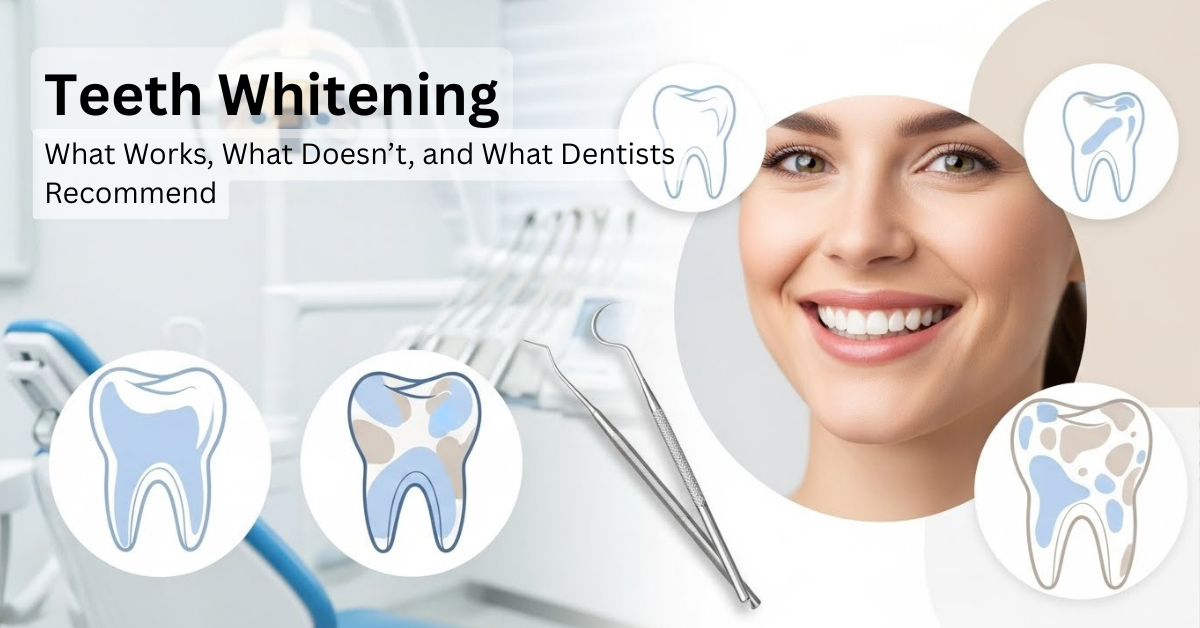
Teeth whitening is a cosmetic dental procedure designed to lighten the color of natural teeth by removing stains and discoloration. It targets both extrinsic stains, which occur on the surface of the enamel from food, drinks, or smoking, and intrinsic stains, which develop within the tooth structure due to aging, trauma, or medication use.
Whitening treatments use bleaching agents—most commonly hydrogen peroxide or carbamide peroxide—to break down stain molecules and improve tooth brightness. Unlike veneers or crowns, teeth whitening does not alter the structure of the teeth; instead, it enhances the natural appearance of existing enamel. The effectiveness of whitening depends on the cause of discoloration, the method used, and individual enamel characteristics.
How Does Teeth Whitening Work?
Teeth whitening works through a chemical process that penetrates enamel and breaks down stains into smaller, less visible particles. While different whitening methods vary in strength and delivery, the underlying mechanism is similar.
Step-by-Step Whitening Process
- Application of whitening agent: A peroxide-based gel is applied to the tooth surface
- Penetration into enamel: The agent enters microscopic pores in the enamel
- Oxidation reaction: Stain molecules are broken apart chemically
- Color lightening: Teeth appear brighter as stains become less visible
- Stabilization: Enamel rehydrates and color settles over time
Professional whitening treatments often use higher concentrations of whitening agents under controlled conditions, while over-the-counter options use lower strengths for gradual results.
Why Is Teeth Whitening Important?
Teeth whitening is important not only for aesthetics but also for confidence and social comfort. A brighter smile is often associated with good oral hygiene and overall health, even though discoloration can occur despite proper care.
Benefits of teeth whitening include:
- Improved smile appearance
- Enhanced self-confidence
- More youthful-looking teeth
- Motivation to maintain better oral hygiene
When done responsibly and under professional guidance, teeth whitening can be a safe and effective way to improve appearance without invasive dental procedures.
Common Teeth Whitening Options: What Works and What Doesn’t
Not all whitening methods are created equal. Understanding the effectiveness and limitations of each option helps patients avoid disappointment or damage.
What Works
- Professional in-office whitening: Fast, controlled, and highly effective
- Dentist-supervised take-home trays: Gradual, customizable results
- ADA-approved whitening products: Clinically tested for safety
What Has Limited Results
- Whitening toothpastes: Remove surface stains only
- Over-the-counter strips: Mild improvement for some users
- LED whitening kits without peroxide: Minimal evidence of effectiveness
What Doesn’t Work (or Can Be Harmful)
- DIY remedies (lemon, charcoal, baking soda): Can damage enamel
- Unregulated online products: Safety and effectiveness not guaranteed
Dentists consistently recommend professional whitening or supervised treatments to balance results with enamel safety.
When Should You Consider Teeth Whitening?
You may consider teeth whitening if your teeth appear yellowed, stained, or dull despite good oral hygiene. It’s especially helpful before major life events or when discoloration affects confidence.
Teeth whitening may be appropriate if you:
- Have surface stains from coffee, tea, or wine
- Experience age-related tooth discoloration
- Want a non-invasive cosmetic enhancement
- Have healthy teeth and gums
However, whitening may not be suitable for everyone. Patients with cavities, gum disease, dental restorations on front teeth, or significant sensitivity should consult a dentist before treatment to avoid uneven results or discomfort.
Related Dental Treatments
Teeth whitening is often part of a broader cosmetic and preventive dental care plan. Professional teeth whitening services provide safe, effective results tailored to individual needs. Patients with uneven coloration may benefit from dental veneers to address intrinsic discoloration. Dental cleanings help remove surface stains and support whitening longevity. For patients interested in overall smile enhancement, cosmetic dentistry services can combine whitening with bonding or contouring for comprehensive results. Educational blogs on stain prevention and enamel care can further support long-term outcomes.
Frequently Asked Questions
Does teeth whitening damage enamel?
When performed correctly using dentist-approved products, teeth whitening does not damage enamel. Problems typically arise from overuse or unregulated products. Professional supervision helps protect enamel and minimize sensitivity.
How long do teeth whitening results last?
Results can last several months to a few years depending on diet, oral hygiene, and lifestyle habits. Regular dental cleanings and avoiding staining foods help maintain whitening results longer.
Is professional teeth whitening better than over-the-counter options?
Yes, professional whitening is generally more effective and safer. Dentists use stronger agents in controlled settings, delivering faster and more predictable results than most store-bought products.
Can all teeth be whitened?
Natural teeth respond to whitening, but crowns, veneers, and fillings do not change color. Intrinsic stains may also respond less predictably. A dental evaluation helps determine expected outcomes.
Does teeth whitening cause sensitivity?
Temporary sensitivity is common but usually mild. Dentists can adjust treatment strength and recommend desensitizing products to minimize discomfort during and after whitening.
Conclusion
Teeth whitening can be a safe, effective way to enhance your smile when approached with accurate information and professional guidance. While many products promise dramatic results, dentist-recommended whitening methods remain the most reliable and enamel-safe options. Understanding what works, what doesn’t, and when whitening is appropriate helps patients avoid unnecessary risks and unrealistic expectations. By consulting a dental professional and maintaining good oral hygiene, you can achieve lasting whitening results that support both confidence and long-term oral health.