
How Dental Implants Work & How Long They Last
Introduction
Dental implants have become a leading solution for replacing missing teeth, offering a durable, natural-looking option for restoring your smile. Many patients in Texas are curious about how dental implants work, how long they last, and whether they are worth the investment. Dental implants differ from dentures or bridges because they are anchored directly into the jawbone, providing stability and preserving bone structure. In this guide, we’ll explain the step-by-step process of dental implant placement, factors that affect longevity, and tips to ensure your implants last for years. Understanding the procedure and maintenance requirements helps patients make informed decisions and ensures long-term oral health. Whether you’re considering your first implant or exploring options to replace failing teeth, this article provides clear insights.
What Are Dental Implants?
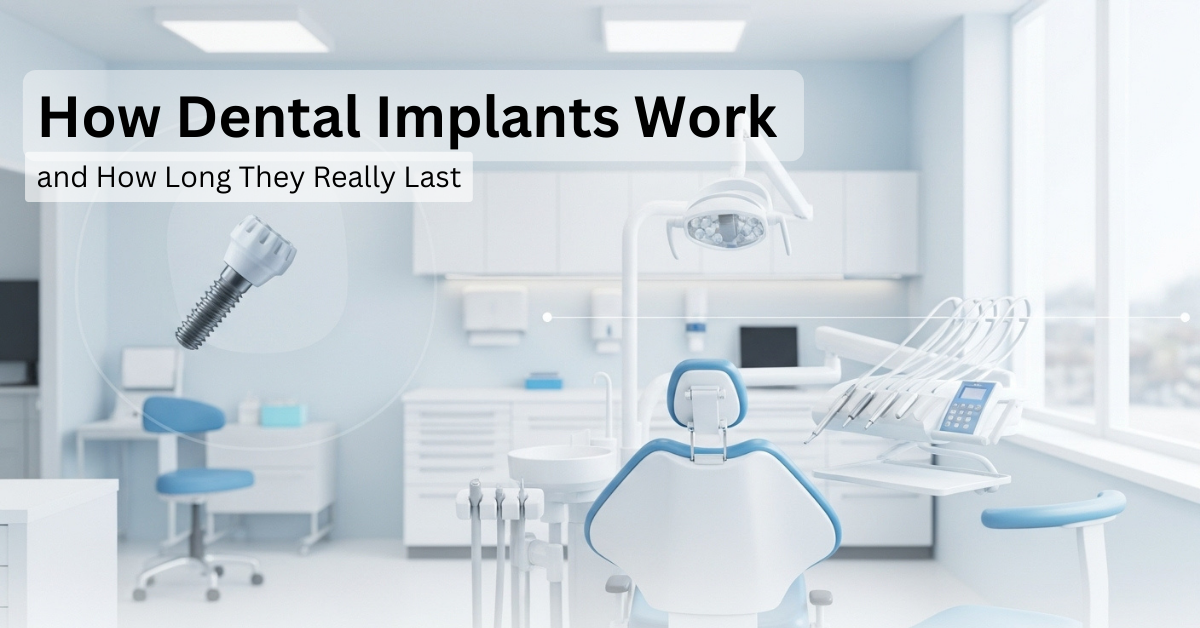
Dental implants are artificial tooth roots, usually made of titanium, surgically placed into the jawbone to support crowns, bridges, or dentures. They provide a stable foundation for replacement teeth and mimic the structure of natural teeth. Unlike removable dentures, dental implants integrate with the jawbone through a process called osseointegration, ensuring long-term durability and comfort.
How Does the Dental Implant Process Work?
The dental implant procedure typically involves several steps:
- Initial Consultation: Your dentist in Texas will evaluate oral health, take X-rays or 3D scans, and discuss treatment options.
- Tooth Extraction (if needed): Any damaged teeth are removed before implant placement.
- Implant Placement: Titanium posts are surgically inserted into the jawbone under local anesthesia.
- Healing and Osseointegration: The implant fuses with the jawbone over several months, creating a strong foundation.
- Abutment Placement: A small connector is attached to the implant to hold the replacement tooth.
- Crown Placement: The final custom-made crown is secured, completing the restoration.
Why Dental Implants Are Important
Dental implants are important because they:
- Preserve jawbone structure and prevent bone loss.
- Restore normal chewing and speaking functions.
- Provide a natural-looking, permanent solution compared to dentures.
- Improve overall oral health by supporting adjacent teeth.
- Boost confidence and aesthetics with a long-lasting smile.
How Long Do Dental Implants Last?
With proper care, dental implants can last 20+ years or even a lifetime. Factors that influence longevity include:
- Oral hygiene habits
- Regular dental check-ups
- Smoking and lifestyle choices
- Quality of the implant and placement procedure
- Adequate jawbone density
Patients in Texas who maintain good dental hygiene and regular professional care often enjoy implants that last decades, making them a worthwhile investment.
Common Situations / Use Cases for Dental Implants
Dental implants are suitable for:
- Replacing one missing tooth
- Supporting multiple missing teeth with implant bridges
- Securing full dentures for enhanced stability
- Patients with strong jawbone structure and healthy gums
- Adults seeking a permanent solution over removable dentures
When Should You Consider Dental Implants?
Consider dental implants if you:
- Have missing or failing teeth
- Experience difficulty chewing or speaking
- Want a permanent alternative to dentures
- Wish to maintain facial structure and prevent bone loss
- Desire a natural-looking, durable smile solution
Related Dental Treatments
Dental implants are often combined with:
- Cosmetic Dentistry: Veneers, bonding, or teeth whitening for a complete smile makeover
- Dentures & Crowns: Implant-supported dentures or crowns for better stability
- General Dentistry: Preventive care to ensure the health of surrounding teeth
Frequently Asked Questions About Dental Implants
Q1: How long does a dental implant procedure take?
A: The process usually takes several months, including initial consultation, implant placement, and healing for osseointegration before crown attachment.
Q2: Are dental implants painful?
A: Most patients experience minimal discomfort. Local anesthesia is used during surgery, and post-procedure pain can be managed with prescribed medications.
Q3: Can dental implants fail?
A: Implant failure is rare but can occur due to infection, poor oral hygiene, smoking, or insufficient jawbone density. Regular check-ups reduce risks.
Q4: How do I care for my dental implants?
A: Maintain excellent oral hygiene with brushing, flossing, and professional cleanings. Avoid hard foods that can damage the crown.
Q5: Are dental implants suitable for older adults?
A: Yes, as long as the patient has sufficient jawbone density and healthy gums, age is generally not a limiting factor.
Conclusion (90 words)
Dental implants offer a long-lasting, natural-looking solution for missing teeth, improving both function and aesthetics. Understanding the process, benefits, and maintenance helps patients in Texas make informed decisions for long-term oral health. With proper care and regular dental visits, implants can last decades, supporting chewing, speech, and confidence. If you’re considering tooth replacement, consult a professional dentist in Texas to evaluate your suitability for dental implants and discuss personalized treatment options for a healthy, beautiful smile.